Is It Time to Upgrade Your Home with Air Conditioning?
There comes a point for many homeowners when the combination of hotter summers, inconsistent indoor temperatures and rising energy awareness makes air conditioning feel less like an optional extra and more like a sensible upgrade. If you have found yourself propping windows open on warm evenings, using fans that simply circulate warm air or struggling to heat a specific room efficiently in winter, the signs are probably already pointing you in that direction.

Why you can trust our content

At a glance
This guide is designed to help you think through whether the time is right to upgrade, what to consider before committing and what the process of having a system fitted actually looks like in practice.
Speak to an installer for tailored advice on whether air conditioning is the right solution for your home.
What Are the Signs That Your Home Would Benefit from Air Conditioning?
There are several clear indicators that a home is likely to benefit from a fitted air conditioning system. If any of the following apply to your situation, it is worth exploring your options:
Any one of these is a reasonable prompt to consider upgrading. Several of them together make a compelling case.
How Has Home Air Conditioning Changed in Recent Years?
The domestic air conditioning market has changed considerably over the past decade. Older systems were often bulky, noisy and expensive to run fair criticisms that put many homeowners off. Modern units bear little resemblance to those earlier versions.
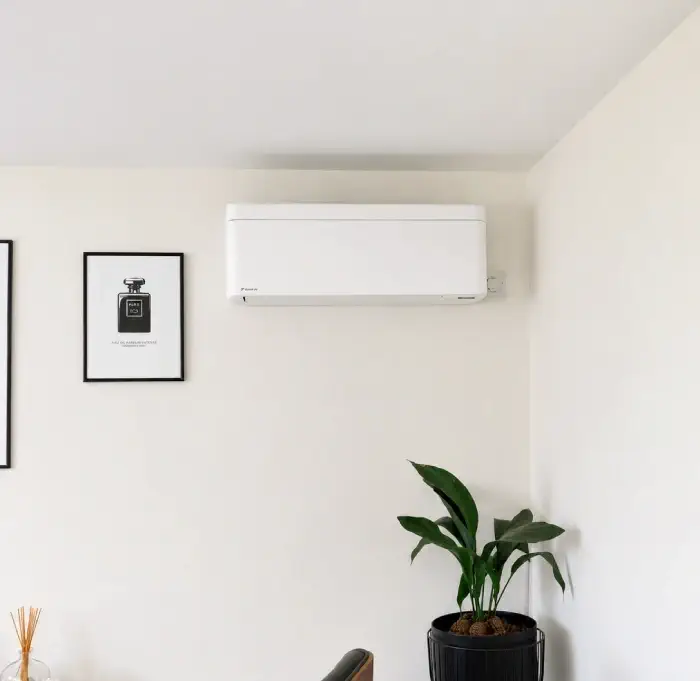
Today’s wall-mounted split systems are slim, quiet and designed to operate efficiently even in heating mode. They use inverter technology to vary their output continuously rather than switching between fixed high and low settings, which significantly reduces running costs compared to older fixed-speed systems. Many also incorporate advanced air filtration, making them genuinely useful for households with allergy or respiratory concerns.
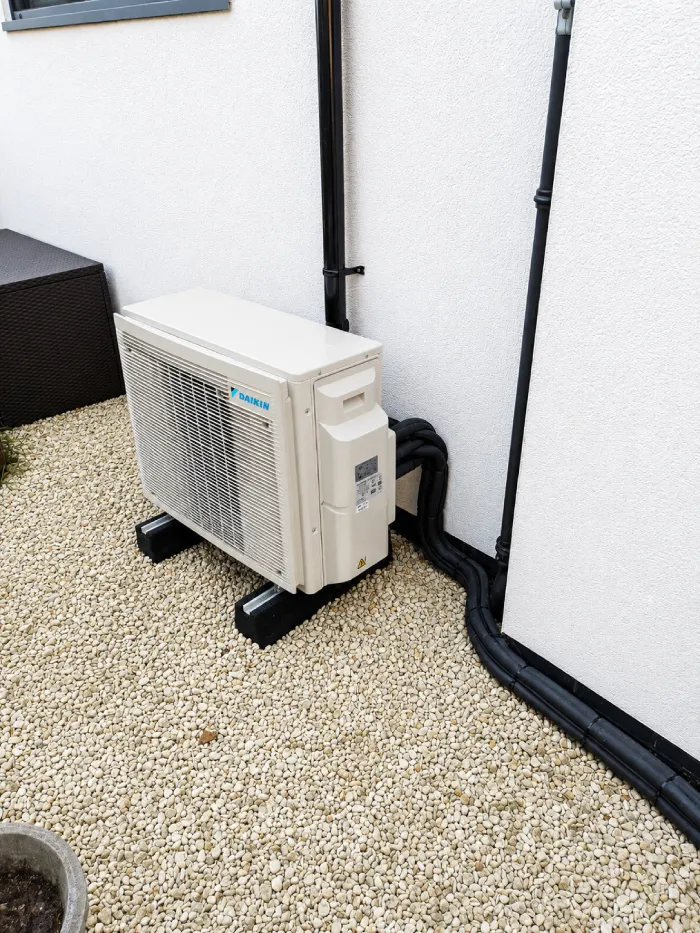
The range of brands and product tiers available also means there is a system to suit most budgets. Entry-level options from brands such as Midea provide reliable performance for straightforward requirements, while premium systems from Daikin and Mitsubishi Electric offer additional features, enhanced efficiency and greater long-term durability.
What Does the Installation Process Look Like?
Understanding the process from start to finish makes the decision easier and removes a lot of the uncertainty that holds homeowners back. Here is a general overview of how a domestic installation typically progresses:
| Stage | What Happens |
|---|---|
| Initial Survey | An engineer visits to assess the property, room sizes, pipe run options, and suitable unit positions. |
| Quotation | A fixed quote is provided based on the survey findings. |
| Scheduling | An installation date is often agreed upon within a short lead time, particularly outside peak summer demand. |
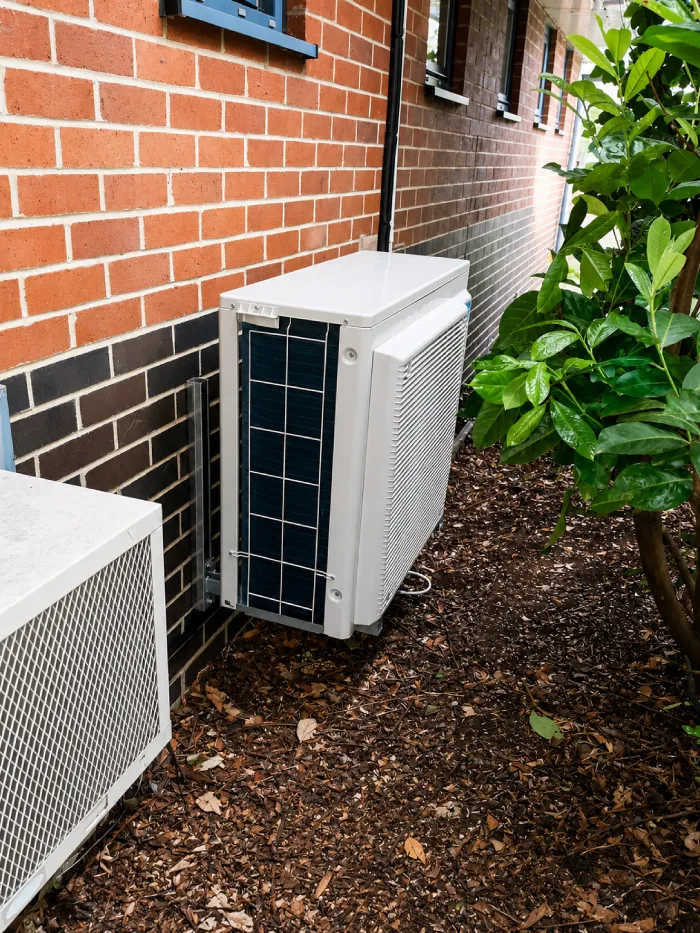
| Installation Day | The indoor unit, outdoor condenser, and pipework are fitted by accredited installers in a single visit. |
| Handover | The system is tested, demonstrated, and all relevant documentation, including Part L certification, is provided. |
| Aftercare | A maintenance plan is discussed to protect the system’s performance and the manufacturer’s warranty. |
What type of property do you have?

Detached

Semi Detached
Terraced

Flat

Bungalow

Commercial or small office
It just takes 60 seconds
And then you can book a free consultation
Is a New Air Conditioner in Cheltenham Worth the Investment?
For most homeowners who have lived without climate control, a new air conditioner in Cheltenham is one of the upgrades that tends to exceed expectations. The combination of cooling in summer, supplementary heating in winter, dehumidification through the wetter months, and year-round air filtration means the system earns its place throughout the calendar, not just during heatwaves.
Homes across Cheltenham and the Cotswolds area include a wide range of property types from period townhouses to modern new builds, and wall-mounted split systems are adaptable enough to suit most of them. The key is having the system correctly sized and fitted by accredited professionals who understand how different property characteristics affect performance.
Final Thoughts
If your home has rooms that are too hot in summer, too cold in winter or simply not comfortable enough for year-round living, air conditioning is a practical and increasingly accessible solution. Modern systems are quiet, efficient and adaptable to most property types, and when fitted correctly by accredited professionals, they add genuine long-term value to your home.
McAlpine Grant Ilco Ltd offers domestic air conditioning installation across Cheltenham and the wider Gloucestershire area, backed by over 25 years of experience and manufacturer-approved installer credentials. Contact the team today to arrange a survey and find out which system is right for your home.
Related articles
What type of property do you have?
Detached
Semi Detached
Terraced
Flat
Bungalow
Commercial or small office
At a glance
This guide is designed to help you think through whether the time is right to upgrade, what to consider before committing and what the process of having a system fitted actually looks like in practice.
Speak to an installer for tailored advice on whether air conditioning is the right solution for your home.
What Are the Signs That Your Home Would Benefit from Air Conditioning?
There are several clear indicators that a home is likely to benefit from a fitted air conditioning system. If any of the following apply to your situation, it is worth exploring your options:
Any one of these is a reasonable prompt to consider upgrading. Several of them together make a compelling case.
How Has Home Air Conditioning Changed in Recent Years?
The domestic air conditioning market has changed considerably over the past decade. Older systems were often bulky, noisy and expensive to run fair criticisms that put many homeowners off. Modern units bear little resemblance to those earlier versions.
Today’s wall-mounted split systems are slim, quiet and designed to operate efficiently even in heating mode. They use inverter technology to vary their output continuously rather than switching between fixed high and low settings, which significantly reduces running costs compared to older fixed-speed systems. Many also incorporate advanced air filtration, making them genuinely useful for households with allergy or respiratory concerns.
The range of brands and product tiers available also means there is a system to suit most budgets. Entry-level options from brands such as Midea provide reliable performance for straightforward requirements, while premium systems from Daikin and Mitsubishi Electric offer additional features, enhanced efficiency and greater long-term durability.
What Does the Installation Process Look Like?
Understanding the process from start to finish makes the decision easier and removes a lot of the uncertainty that holds homeowners back. Here is a general overview of how a domestic installation typically progresses:
| Stage | What Happens |
|---|---|
| Initial Survey | An engineer visits to assess the property, room sizes, pipe run options, and suitable unit positions. |
| Quotation | A fixed quote is provided based on the survey findings. |
| Scheduling | An installation date is often agreed upon within a short lead time, particularly outside peak summer demand. |
| Installation Day | The indoor unit, outdoor condenser, and pipework are fitted by accredited installers in a single visit. |
| Handover | The system is tested, demonstrated, and all relevant documentation, including Part L certification, is provided. |
| Aftercare | A maintenance plan is discussed to protect the system’s performance and the manufacturer’s warranty. |
What type of property do you have?
Detached
Semi Detached
Terraced
Flat
Bungalow
Commercial or small office
It just takes 60 seconds
And then you can book a free consultation
Is a New Air Conditioner in Cheltenham Worth the Investment?
For most homeowners who have lived without climate control, a new air conditioner in Cheltenham is one of the upgrades that tends to exceed expectations. The combination of cooling in summer, supplementary heating in winter, dehumidification through the wetter months, and year-round air filtration means the system earns its place throughout the calendar, not just during heatwaves.
Homes across Cheltenham and the Cotswolds area include a wide range of property types from period townhouses to modern new builds, and wall-mounted split systems are adaptable enough to suit most of them. The key is having the system correctly sized and fitted by accredited professionals who understand how different property characteristics affect performance.
Final Thoughts
If your home has rooms that are too hot in summer, too cold in winter or simply not comfortable enough for year-round living, air conditioning is a practical and increasingly accessible solution. Modern systems are quiet, efficient and adaptable to most property types, and when fitted correctly by accredited professionals, they add genuine long-term value to your home.
McAlpine Grant Ilco Ltd offers domestic air conditioning installation across Cheltenham and the wider Gloucestershire area, backed by over 25 years of experience and manufacturer-approved installer credentials. Contact the team today to arrange a survey and find out which system is right for your home.
Related articles
What type of property do you have?
Detached
Semi Detached
Terraced
Flat
Bungalow
Commercial or small office